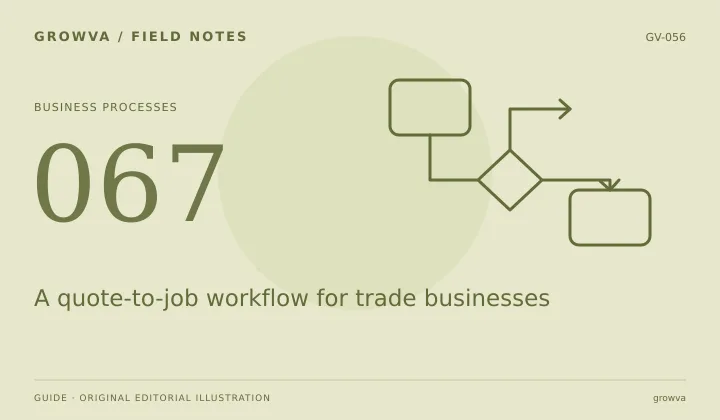
A quote-to-job workflow should show the point at which a customer enquiry becomes authorised work and the information that must accompany it. The quote is only one part of that journey. The office, scheduler and field team need a consistent view of the agreed scope, exclusions and latest customer instructions.
Capture the enquiry before pricing
Give the enquiry a reference and record the requested service, location, contact, relevant photographs or site notes and any information still needed. Assign the person authorised to prepare the quote. Where a technical assessment is necessary, record who will provide it instead of filling gaps with assumptions.
The quote record should retain its issue date, version, scope, price basis, exclusions, validity and approval route as applicable to the business. Refer legal or contract wording to the responsible adviser rather than treating a workflow diagram as a contract template.
Define the release-to-work check
Before scheduling, confirm which quote version was accepted, the evidence of approval and any conditions still outstanding. Transfer the agreed scope into the job record without dropping exclusions or customer commitments. The scheduler should be able to see whether the job is ready for allocation or still awaiting information.
Consider a hypothetical fencing contractor. Quote Q-118 Rev B adds a gate that was absent from Rev A. The customer accepts Rev B, but the field worksheet was created from Rev A. A release check compares the quote reference and revision, catches the mismatch and updates the job pack before materials are ordered.
Keep variations connected
When work changes after acceptance, link the change request to the original job and follow the approved authorisation process. Record the requested change, decision owner, relevant revised document and communication to the field team. Do not let a chat message become a separate, untracked instruction.
At completion, connect the job record back to the accepted scope and approved changes. That makes it easier to identify what was delivered, what remains open and which records support the customer handover.
This is a suggested operational sequence, not advice about construction-contract or payment obligations. Business procedure guidance can help structure responsibilities, but the owner must confirm the actual contract, licensing and technical requirements. Test the workflow against a recently completed straightforward job and a changed-scope job before making it the team’s standard process.